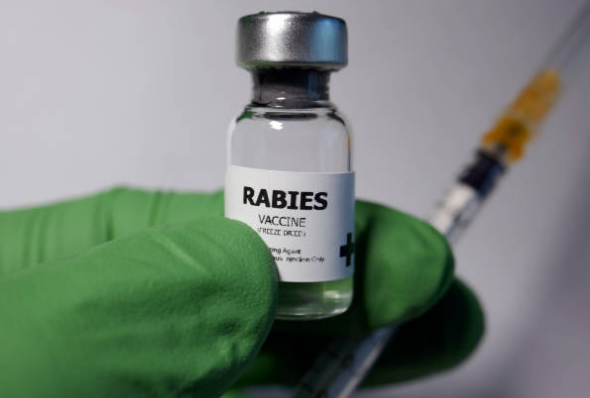
Rethinking Rabies

February 27, 2026

Share Article:

: What History Shows and What Illinois Pet Owners Should Know

Rabies is often portrayed as a deadly, fast-moving viral threat — but the historical record tells a far more complicated story. The Learn The Risk article challenges the foundations of modern rabies science by revisiting the work of Louis Pasteur, whose experiments shaped today’s assumptions about the disease.


According to the documented accounts, Pasteur never isolated a rabies virus and could not produce rabies symptoms naturally. His experiments only created neurological collapse when he drilled into animals’ skulls and injected ground-up brain and spinal tissue directly into the brain . Injections through veins or other routes failed or produced inconsistent results. Critics argue this does not demonstrate a contagious virus — only that severe injury to the nervous system causes severe symptoms.


Historical reports also raise questions. Records from the Pasteur Institute list thousands of deaths among people bitten by dogs and treated with Pasteur’s method, while a London hospital documented 2,668 dog-bite patients who received no Pasteur treatment and none developed hydrophobia . These contradictions fuel ongoing debate about how rabies was defined and whether Pasteur’s methods created a narrative that didn’t match natural disease patterns.


The article contrasts Pasteur with Antoine Béchamp, whose “terrain theory” suggested that disease arises from internal imbalance, toxicity, and stress rather than external viral attack. It also argues that conditions like distemper and parvo may reflect toxicity or immune stress rather than viral infection, citing survival data that challenge mainstream assumptions .


What This Means for Illinois Pet Owners

Regardless of where one stands on the historical debate, Illinois law gives pet owners an important protection: medical exemptions for rabies vaccination are allowed.


Under 510 ILCS 5/8(g), a licensed veterinarian may issue a written exemption if a rabies vaccine would endanger an animal’s health. This applies statewide — including Kane County. The exemption must be renewed annually, and owners still pay the county tag fee, but the law clearly recognizes that one-size-fits-all vaccination is not always safe or appropriate.


The Bottom Line

The Learn The Risk article invites readers to question long-held assumptions about rabies and the origins of virology. Whether one fully agrees or not, the historical record shows that the story is not as straightforward as often presented. And for Illinois families, it’s essential to know that the law supports individualized veterinary care — including rabies vaccine exemptions when medically necessary.


For more info:

RABIES, LOUIS PASTEUR, AND THE FRAUD THAT BUILT MODERN VIROLOGY


510 ILCS 5/8

Follow Us:

Latest Articles, Submissions & Community Highlights

Participating groups, neighborhood leaders, and citizen coalitions can share news, documents, or resources here.

February 27, 2026
Illinois has just announced that IDPH is adopting the AAP’s 2026 immunization schedule as the state’s official guidance. That means Illinois is explicitly relying on the AAP’s authority, credibility, and safety claims. Because of that, the CHD lawsuit—if it moves forward—could have direct implications for Illinois policy, messaging, and public trust. Below are the key ways this could play out. 1. If the lawsuit exposes misleading safety claims, Illinois may face pressure to re-evaluate its adoption of the AAP schedule Illinois is using the AAP schedule as its official recommendation. If a federal court finds that the AAP: misrepresented safety data overstated testing concealed conflicts of interest or engaged in deceptive practices then IDPH’s reliance on the AAP could be called into question. That would open the door for: public hearings legislative scrutiny revisions to state guidance greater transparency requirements Illinois agencies may be forced to justify why they adopted a schedule tied to an organization under federal RICO litigation. 2. The lawsuit could strengthen arguments for parental rights and informed consent in Illinois If the case uncovers evidence that the AAP overstated safety or minimized risks, Illinois parents could use that to: challenge school exclusion policies push for broader medical exemptions demand independent safety reviews oppose automatic adoption of national schedules This would be especially relevant in counties like Kane , where parents are already organizing around transparency and choice. 3. IDPH may have to adjust its public messaging Right now, IDPH is promoting the AAP schedule as authoritative and evidence-based. If the lawsuit reveals: flawed science misleading statements or financial conflicts IDPH may need to revise its communications to avoid appearing to endorse an organization found to have misled the public. This could lead to: more cautious language disclaimers or a shift toward “shared decision-making” framing 4. Illinois legislators may introduce bills in response Depending on how the case unfolds, lawmakers could propose: greater oversight of IDPH’s adoption of national schedules requirements for independent state-level safety reviews expanded exemption rights limits on automatic alignment with AAP/CDC recommendation Illinois already has active debates around parental rights, school mandates, and public health authority. This lawsuit could accelerate those conversations. 5. The lawsuit could influence school policy and local health departments Schools and county health departments rely heavily on AAP and CDC guidance. If the AAP’s credibility is legally challenged: schools may hesitate to enforce strict compliance counties may adopt more flexible interpretations medical providers may feel more comfortable issuing exemptions This is especially relevant because Illinois already allows rabies exemptions for pets and religious exemptions for schoolchildren —precedents that show the state can accommodate individualized decisions. 6. Public trust in AAP-aligned guidance may weaken Even before any ruling, the lawsuit itself may: shift public perception increase skepticism of AAP-endorsed schedules reduce compliance with IDPH recommendations increase demand for transparency and alternatives Illinois parents who already feel unheard may become more vocal.  Bottom Line for Illinois Because IDPH has formally adopted the AAP’s 2026 schedule, any legal finding that the AAP misled the public would directly affect Illinois policy, messaging, and credibility . Even before the case concludes, the lawsuit will: intensify scrutiny empower parental-rights advocates and pressure IDPH to justify its reliance on AAP guidance Breaking: Children’s Health Defense Hits AAP With RICO Suit Over Fraudulent Vaccine Safety Claims • Children's Health Defense IDPH endorses the American Academy of Pediatrics' (AAP) 2026 Child and Adolescent Immunization Schedule for Illinois: ff3242bf-4c11-4123-a559-5212df28911e.pdf
February 25, 2026
Detransitioner’s legal win affirmed her harm, but she now faces a lifelong journey to heal and find peace with irreversible changes.
February 24, 2026
Parents differ over cellphone bans: restoring classroom focus vs. state overreach that sidelines parental authority.