HalalFest Comes to Kane County
Should KANE Residents Be Paying Attention?
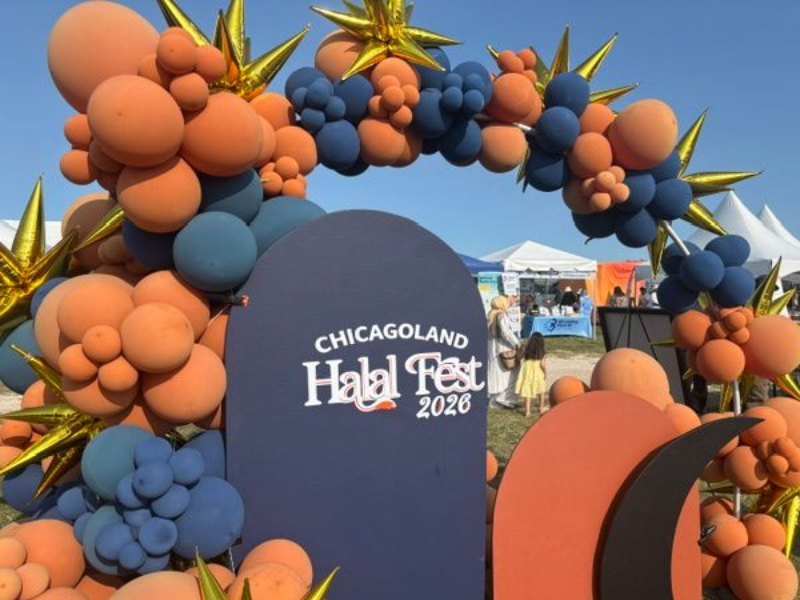
This weekend, August 8 and 9, something relatively new is taking place at the Kane County Fairgrounds in St. Charles: Chicagoland Halal Fest 2026, described by its organizers as one of the largest halal festivals in the nation.
The event is being hosted by the Illinois Muslim Chamber of Commerce and is being held at the Kane County Fairgrounds, 525 S. Randall Road. Organizers describe it as a two-day celebration featuring halal food, shopping, family activities, entertainment and community networking.
On its face, there is nothing unusual about an ethnic or religious community holding a cultural festival. Kane County hosts festivals celebrating virtually every imaginable culture, heritage and tradition.
But there is a larger question that Kane County residents should be willing to ask:
What does the growing presence of organized religious and cultural institutions mean for the future of our community?
That question should not be dismissed as "Islamophobia." Nor should it be answered by assuming that every Muslim American shares the same political or religious objectives. They clearly do not.
Instead, it should be examined honestly, just as we should examine the growing influence of any organized movement—religious, political, ideological or otherwise.
A Festival Is Not the Problem
It is important to make a distinction.
Halal Fest is not evidence that Kane County is being "taken over." There is no evidence that the event itself is promoting violence, extremism or the replacement of American law.
The organizers publicly describe the festival as a celebration of halal culture and a way of bringing together Muslim businesses, professionals, investors and entrepreneurs.
That is precisely why the event deserves to be viewed through the broader lens of community growth and institutional development, rather than through fear.
A community that begins with cultural gatherings can eventually develop businesses, nonprofit organizations, schools, advocacy groups, political organizations and other institutions.
There is nothing inherently wrong with that.
But citizens have every right to ask what values those institutions promote and whether those values are compatible with the constitutional principles and civic traditions of the communities in which they operate.
History Offers Lessons
One of the sources provided for this discussion is a Stanford University program examining the historical spread of Islam in West Africa.
The study describes a three-stage historical framework: containment, mixing and reform.
According to the study, early Muslim communities existed largely as distinct communities connected to trade. Over time, Muslim practices became increasingly integrated into local societies. Eventually, in some historical settings, reform movements sought greater conformity with Islamic doctrine and Islamic law. The study specifically discusses the historical development of Islamic societies in West Africa and the emergence of movements that sought to implement Shariah (sneak peak at the festival - click here)
That history is important—but it must also be understood correctly.
It is a historical model, and Kane County better operate with eyes wide open
American Muslims live under a constitutional system dramatically different from the medieval and 19th-century societies discussed in the Stanford study. The United States protects religious freedom for Muslims just as it protects religious freedom for Christians, Jews and people of other faiths.
Nevertheless, history demonstrates something worth remembering:
Religious communities do not remain static.
They establish institutions. They educate their children. They develop businesses. They build political relationships. They advocate for policies. They form organizations capable of influencing the communities around them.
That is true of Muslims.
The proper response isn't fear.
It is civic awareness, and involvement
The Question Kane County Should Be Asking
The Illinois Muslim Chamber of Commerce describes itself as an organization connecting businesses, professionals, investors and entrepreneurs within Illinois' Muslim community.
That is more than simply selling food at a festival.
It represents the development of an organized economic and civic community.
Not inherently threatening on the surface, but it does raise legitimate questions.
Who are the muslim organizations becoming influential in Kane County and in Illinois?
What are their stated goals?
Who funds them?
Who are their political allies?
What public policies do they support?
What do they teach their children?
Do they support the supremacy of the United States Constitution and American law?
Do they believe religious law should ever supersede civil law?
Do they support equal rights for men and women?
Do they support freedom of speech—including speech that criticizes Islam?
Do they support freedom of religion for people who reject Islam?
Integration Is a Two-Way Street
America has historically absorbed waves of immigrants and religious communities.
The successful American model has not required people to abandon their faith, their food, their language or their cultural heritage.
But it has required something more fundamental:
A shared allegiance to the American constitutional system.
You can be Muslim and American.
You can be Christian and American.
You can be Jewish and American.
You can practice no religion at all and still be completely American.
What cannot be allowed—regardless of who advocates it—is the idea that a separate legal or political system should ultimately supersede American law. Shariah law is fully opposed to the American legal and judicial system.
The debates about Muslim integration are not uniquely American. Scholars and policymakers in Europe have spent years examining questions involving immigration, religious identity, assimilation, secularism and political participation. Brookings, for example, has examined the complicated relationship between Muslim immigration, integration and political reactions in Sweden.
The lesson isn't that Europe proves something inevitable about America.
The lesson is that integration deserves serious attention before problems become entrenched.
Kane County Should Be Awake
There is a temptation in modern America to respond to uncomfortable questions by labeling the person asking them.
That's not healthy for democracy.
Kane County residents should be able to attend Halal Fest.
Muslim families should be able to celebrate their culture.
Muslim-owned businesses should be able to succeed.
Muslim Americans should be able to participate in politics.
And Kane County residents should simultaneously have the right to ask difficult questions about the institutions developing around them.
Those principles are not contradictory.
In fact, they are the essence of an open society.
The arrival of Halal Fest at the Kane County Fairgrounds should be viewed as a reason to pay attention.
Pay attention to demographic changes.
Pay attention to organizations.
Pay attention to political advocacy.
Pay attention to educational institutions.
Pay attention to public funding.
Pay attention to candidates seeking support from organized religious constituencies.
And most importantly, pay attention to whether everyone—regardless of religion—is being held to the same constitutional standard.
Kane County does not need religious discrimination.
It does not need hostility toward Muslims.
But neither does it need blind acceptance of any ideology simply because questioning it has become politically uncomfortable.
A confident community can welcome people while still defending its principles.
But let us never forget. We are Americans living under the constitution of the United State of America. And we follow the laws created under that constitution.
But the Quran specifically states
Qur'an 9:33:
“He is the One Who has sent His Messenger with guidance and the religion of truth, making it prevail over all others…”
There is only room for one religion. And this belief flies in the face of what the United States was created for
Latest Articles, Submissions & Community Highlights
Participating groups, neighborhood leaders, and citizen coalitions can share news, documents, or resources here.