
Kane County's 2% Property Tax Levy Increase & D303's Massive Tax Grab
HOW MUCH MORE CAN A D303 FAMILY AFFORD?
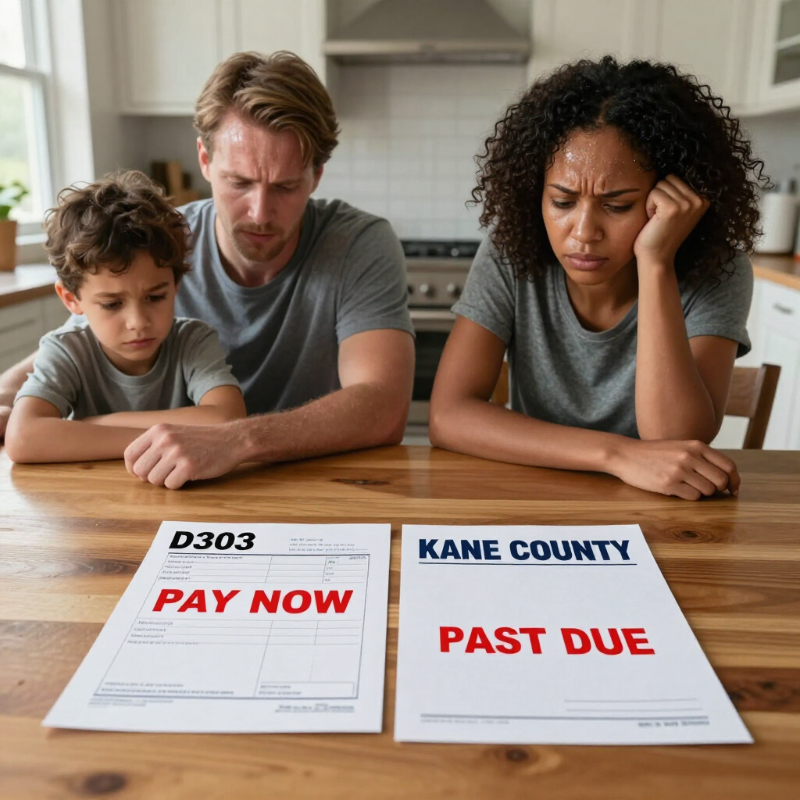
D303's New Tax INCREASE REQUEST is on top of the Kane County Board's Tax Levy Hike.
On November 3, District 303 voters will decide whether to authorize $282.5 million in new bonds as part of a $312.5 million facilities package. D303 says it will contribute another $30 million from district resources. The financing plan discussed by the Board uses a 25-year bond structure. That decision does not occur in a vacuum.
KANE board already gave a 2% TAX LEVY increase to ALL D303 RESIDENTS
The Kane County board increased property taxes with a 2% levy increase. In August 2026, the Board approved approximately $64.9 million in county property-tax levies for taxes payable in 2027 — roughly $2.3 million more than the prior year. Earlier budget planning had contemplated a 2.7% CPI-based levy increase. The Daily Herald also correctly noted that the final dollar impact on individual homeowners is not yet established because tax rates and property values still matter.
now ADD D303's massive tax burden REFERENDUM
D303 has created its own tax-impact calculator for the proposed $282.5 million bond issue. For a $500,000 home with the standard general homestead exemption and no additional exemptions, the estimated referendum impact is approximately $645.77 MORE PER YEAR.
D303 specifically cautions that actual payments can vary based on districtwide EAV growth, reassessment, exemptions, changes in law and other factors. So, using those assumptions. D303 referendum: approximately $646/year And that assumes that your home value never goes up. If it goes up, so will your bill and what you owe. Proponents of the bill say that it will raise your home's value but fail to mention that every dollar of increased value will result in more taxes paid by the homeowner.
D303 has discussed a 25-year bond structure. If today's estimated $645.77 annual referendum impact simply remained constant for 25 years — which is an illustration, not a prediction of the actual future tax schedule — that would equal approximately:
$16,144
in additional nominal property taxes attributable to the referendum on that $500,000 home over 25 years. That's also assuming that the homeowner's home value never increases.
NOW LOOK AT D303'S PAYROLL
Taxpayers are also entitled to understand how much the district pays its highest-compensated employees. According to GovSalaries, below are the top 25 paid D303 employees:
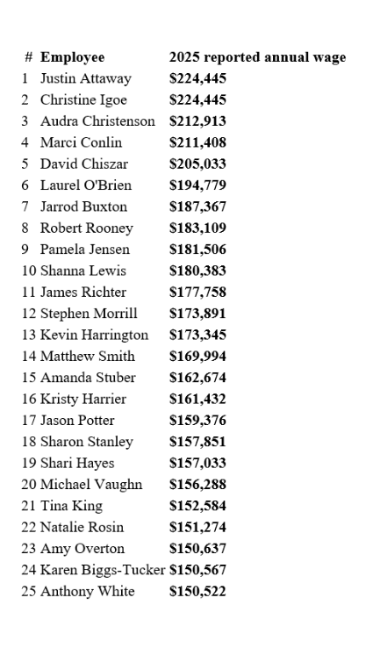
Just over $4,400,000 a year for those 25 salaries. Over the next 25 years, that's a bit over $110,000,000 with no future inflation or raises. Does a school district that spends that much money on the top 25 employees need all this money? That's an average of approximately $176,425 for each of these 25 employees. And it does not include Dr. Gordon's base salary of just over $275,000.
There is an important qualification: this is a 2025 GovSalaries database snapshot, not D303's official current 2026 top-25 compensation report. GovSalaries itself cautions that its information may not be complete. D303 now publishes separate 2025-26 total-compensation and 2026 salary reports.
In fact, this database should not be confused with a complete picture of district leadership compensation. Superintendent Dr. Paul Gordon's official contract alone provided a $275,834 base salary for 2024-25, with subsequent annual increases of as much as 3%, plus district-paid TRS and THIS contributions.
SALARIES AND THE BOND REFERENDUM ARE TWO DIFFERENT ISSUES
That distinction matters. The $282.5 million referendum is for capital facilities, not administrator or teacher salaries. D303 states that referendum proceeds can legally be used for buildings, renovations, infrastructure and related capital projects — not employee payroll.
So the payroll numbers should not be presented as though cutting salaries could automatically eliminate the need for the bond issue.
But taxpayers can still reasonably examine the entire financial picture when government asks them to take on hundreds of millions of dollars in additional debt.
WHAT ARE TAXPAYERS BEING ASKED TO FINANCE?
The ballot proposal includes roof replacements; mechanical, electrical and plumbing work; safety and security improvements; ADA accessibility; expanded Career and Technical Education space; additions and renovations; and a new physical education and athletic facility.
D303's position is that significant facility needs have accumulated over decades, that delaying necessary work could increase future costs, and that bond proceeds are restricted to facilities.
The financial question for taxpayers is therefore not simply whether some of these projects are worthwhile.
It is whether $282.5 million in new borrowing, financed over approximately 25 years, and the resulting additional property-tax obligation represent the appropriate scope, timing and method of paying for them.
For a homeowner with a $500,000 house, the district's own calculator estimates roughly $646 more every year from the referendum alone.
Kane County has separately increased the amount it intends to collect through its property-tax levy.
And those increases arrive on top of the property taxes homeowners already pay.
Read the ballot question. Review the project list. Look at the compensation reports. Run your own home through D303's tax calculator.
Then decide whether the additional debt and tax obligation are justified.
Latest Articles, Submissions & Community Highlights
Participating groups, neighborhood leaders, and citizen coalitions can share news, documents, or resources here.